
How we surf the web is set to be revolutionized. Opera, the Norwegian browser firm, has launched its innovative artificial intelligence-powered browser, Neon, officially. And unlike other browsers, it doesn’t merely assist you in finding information; it completes tasks for you proactively. Opera is throwing down the gauntlet in a heated fight against rival firms like Perplexity’s Comet browser with this move, ushering in a new era where browsers evolve into intelligent assistants instead of mere web navigation tools.
Opera started releasing Neon to its initial users on September 30, 2025, following years of work intended to rethink what a web browser is and can be. Whereas ordinary browsers just present web pages, Neon is what the firm describes as an “agentic browser,” one that is capable of learning your desires, exploring websites for you, completing forms, buying items, and performing complicated multi-step tasks without constant human intervention.
What Makes Neon Different?
At the core of Opera Neon are three different artificial intelligence assistants, each optimized for particular categories of tasks. These AI assistants collaborate to turn the browser from an idle piece of software into an active player in your online life.
The first of these, called Neon Chat, is your dialogue friend. It responds to your queries, explains things to you, and makes mysteries clear. It’s like having an intelligent buddy always prepared to talk about whatever you happen to be reading about.
Neon Do goes the next step by actually doing things for you. That’s where the “agentic” features really come into their own. Want to check prices on a bunch of different shopping websites? Neon Do is capable of opening tabs, going to other stores, gathering information, and showing you a detailed comparison. Going on a trip?
The third assistant, Neon Make, focuses on content creation. It can write code snippets for developers, draft documents, create presentations and generate various types of content based on your instructions.
For professionals who frequently create digital content this feature could save countless hours of work.
What makes these assistants stand out is that they can work on several sites at once, sense context, and be aware of your larger objectives. If you are researching for a paper, Neon can find related data in multiple tabs and recommend keeping them together, so nothing falls into the abyss of dozens of open browser windows.
The Premium Price Tag
In contrast to most free-to-use web browsers, Opera Neon will have a subscription cost of about twenty dollars a month. This puts it squarely up against other paid AI offerings and acknowledges the high computational power needed to drive its AI capabilities.
The subscription model is a significant change in the way browser companies approach monetization. Browsers have been free for decades, with revenue coming in through search engine deals, advertising, and data harvesting. Opera is hoping that heavy users who rely heavily on AI features will be willing to pay for a browser that puts these capabilities directly into their workflow.
Early access users are getting invitations in batches, and Opera intends to roll out availability incrementally based on feedback and system performance. The company is not stating when Neon will be available to the general public without an invitation.
Taking On Perplexity’s Comet
Opera’s release of Neon happens as the market for AI-powered browsers indicates growing heat. Perplexity, the AI search business that has attracted much attention for its smart search abilities, launched its own browser, Comet, this year. The showdown between these two offerings reflects how key players in the tech universe view AI-powered browsing as the future.
Perplexity’s Comet browser also promises to revolutionize the way individuals interact with the web. It includes an AI companion that can respond to queries, summarize content and assist in organizing research. Like Neon Comet seeks to eliminate the mental strain of juggling dozens of tabs and remembering information spread across multiple sites.

The main difference is in their methods. Comet is about speed of thought and smart information management, acting as a thinking companion that assists you in making sense of the web. Neon, however, is more about action and action, acting as a browser that assists you not just in thinking but even in doing things for you.
Both browsers share the same basic dilemma: persuading consumers that an AI-based browser is worth adopting as a replacement for free offerings such as Google Chrome, Mozilla Firefox, and even Opera’s classic browser. The question is whether the convenience and productivity savings are worth the expense and learning curve for adopting a new mode of browsing.
The Broader AI Browser Movement
Opera and Perplexity are not the only ones in this market. Other firms are venturing into AI-based browsing experiences. The Browser Company, whose innovative Arc browser has garnered attention, has been quietly developing Dia, another AI-enabled browsing tool. Microsoft incorporated Copilot deeply into its Edge browser with AI support within a widely understood interface. Even Google Chrome has been introducing AI features, although not as aggressively as these dedicated AI browsers.
Such a rush of interest is all part of a huge tide in technology: the adoption of artificial intelligence in every aspect of online life. As smart phones developed from uncomplicated comands tools to powerful computers in the pocket, browsers are transforming from basic web readers to clever assistants that can read context, sense what’s needed, and react in turn.
The ramifications go far beyond simple convenience. If browsers really can make educated guesses about what people would like to do and assist them in getting on with it, then they have the potential to transform the way people work, shop, learn, and communicate with one another across the Net. Instead of clicking from page to page, filling out identical forms, and manually comparing facts, users could just instruct the browser as to what they wish to do and the browser would take care of the rest.
Privacy and Trust Issues
More power comes greater responsibility, and AI browsers raise serious issues of privacy and security. In order for Neon to act on your behalf, it requires widespread access to websites, private data, and surfing habits. Users have to believe that their data will be secure and utilized rightly.
Opera has pointed out that Neon is privacy-oriented, yet the firm has not as yet provided detailed data on how user data is utilized, stored, and used to train AI models. Users will be turning to such information when deciding whether to utilize the browser or not.
There are the same kinds of concerns about how these AI browsers identify themselves to websites. Some AI agents can bypass some protections on websites because they identify themselves as though they’re human entities rather than automated machines. As it enables functionality, it does raise ethical questions regarding transparency and consent.
Real-World Applications
The applications of an agentic browser like Neon in the real world are numerous.For professionals, it might assist with research assignments by collecting data from many sources, contrasting information, and compiling results in a uniform format. Online consumers might employ it to seek the best price without visiting hundreds of sites individually. Career seekers might streamline aspects of the application process, but would still need to tailor their application for every position.
Students and academics would be able to utilize Neon to collect sources, gather references, and even assist with writing. Tourists would be able to streamline travel planning by having the browser at the same time compare travel, accommodations, and rental cars. Developers would be able to reduce their workflow by having Neon write code snippets, verify documentation, and even debug minor problems.
But the technology is not infallible. AI systems can err, misinterpret instructions, or bog down on intricate tasks that demand delicate judgment. The users will have to check significant actions and keep an eye on things instead of trusting the AI blindly to take care of everything.
The Road Ahead
The new generation of AI browsers is able to manage fairly simple tasks, but future iterations could manage complex, multi-day projects, master individual user habits deeply, and work with other AI systems.
The success of Neon and other such browsers will hinge on a number of factors: reliability, user-friendliness, cost-effectiveness, privacy safeguarding, and whether they indeed save the user appreciable time and effort. Early users will decide if this vision of AI-driven browsing will be appealing to a wider audience or will be a niche market product for technology enthusiasts and intense AI users.
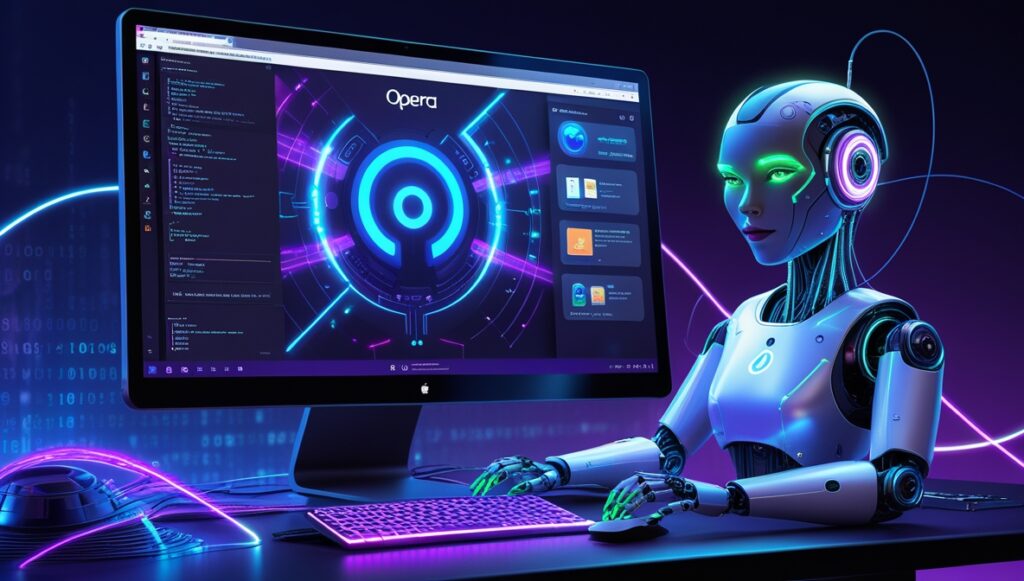
For Opera, a company that’s long staked its reputation as an innovator in the browser arena, Neon is a radical wager on the future of computing. Instead of just bolting AI capabilities onto their current browser, they’ve created a whole new product from scratch based on artificial intelligence.
What This Means for Users
For the average internet consumer, the arrival of Neon and other browsers is an indicator that the web experience is to become more intelligent and interactive. Whether you choose to embrace these new devices or remain with conventional browsers, the competition will encourage innovation throughout the industry.
The twenty dollar monthly cost means Neon isn’t for everyone.
As the AI browser wars play out, users will have more options than ever. The question is not if artificial intelligence is going to alter the way we navigate the web it already is. The question is which method will gain users’ trust and be the standard for web navigation of the next generation.

Opera’s Neon has joined the fray with ambitious promises and potent tech. Time will tell if it can live up to its dream of a browser that not only displays the web to you but actually works in conjunction with you to get things done. The battle to shape the future of browsing has commenced, and the winner will determine how billions of us interact with the internet in the years to come.








Just wanted to give a shoutout to vf555casino. Been having some fun here, especially on the live dealer games. Good variety and decent odds. Take a look, maybe you’ll find something you like: vf555casino
888blink… graphics are pretty slick! Colors are vibrant and everything loads quickly. User experience is top notch! If you like a fast, flashy site, check out 888blink
Following a link for q9betlink. Seems like a shortcut into the q9bet website. But are these links legit? Worried it might be a phishing attempt. Just saying, be careful out there! q9betlink
BG88 is pretty straightforward. Simple design, easy to understand. I’m not a huge fan of the limited payment options, but the customer service has been helpful. See what you think of bg88!
win2023bet1 looks like a new site. I’m always a bit cautious with new ones, but hey, gotta explore, right? Testing it out, will report back. The link’s here: win2023bet1
Chillbetnet, eh? Been hearing whispers around town. Gotta check it out, see if it lives up to the hype. Hopefully not just another flash-in-the-pan. Fingers crossed for some real fun and good payouts! Check it out yourself at chillbetnet!
PBV88asia, eh? Asia? Hmmm. Need to explore some eastern flavour. Trying it later. Have you check it? Find out at pbv88asia.
Spinomx, sounds interesting! That’s a good name, hope they have a vast spin field. If you want more spin on your life, just come tospinomx.
Best experience I have had in a long time. Everything from the graphics to the sound is perfect. Really immersive gameplay. idlumba188
Love the localized feel of this site. It makes the whole experience much more comfortable and exciting. Five stars from me. mx7kmx
Honestly surprised by the game variety here. Everything loads quickly and I didn’t run into any glitches. Highly recommend checking out pk666x if you want a fair experience